I know how scary it feels when a tiny part fails in a big machine. You might worry about your heat levels or a total power loss. It is hard to find clear answers about high-current pins like the 2122795139. Many people feel stuck because the technical sheets are too hard to read. You just want to know if this part will work and keep your project safe.
You may face the stress of parts not fitting right during assembly. It is a common pain to see a pin snap or a joint fail. This often happens when boards do not line up perfectly. You need a solution that handles a lot of power without getting too hot. This guide will help you understand this specific pin so you can stop worrying.
I will explain why this pin is special and how it fixes common power problems. We will look at how it moves to prevent breaks and how it stays cool. This is not just a piece of metal; it is a tool to keep your electronics running well. Let us look at the facts and find the peace of mind you need for your work.
Understanding the Role of High-Current Interconnects
The number 2122795139 represents a critical bridge in modern power systems. In the past, moving 200 amps of current required massive cables and bulky connectors. These old methods took up too much space on a circuit board. Today, engineers must pack more power into smaller boxes. This specific pin allows that to happen without sacrificing safety or performance.
This component is the male half of the Sentrality system. It acts as the anchor point for electricity to enter or leave a printed circuit board. When you look at it, you see a solid metal post. However, its internal chemistry and external plating are highly engineered. It is built to survive harsh environments where vibration and heat are constant threats.
By choosing this part, you are opting for a “mezzanine” style connection. This means two boards can sit parallel to each other. Power flows directly from one to the other through these 8.00mm pins. This layout saves space and makes the whole device much more compact. It is the backbone of high-density power architecture.
How the Floating Design Prevents Costly Board Damage
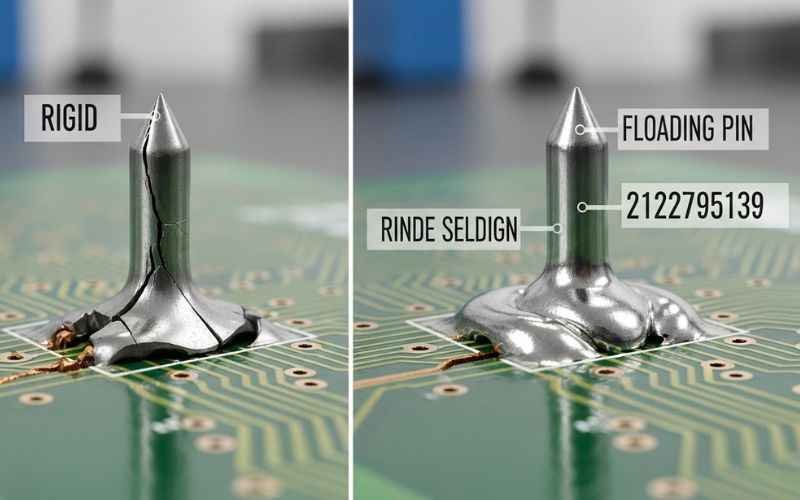
A major hurdle in manufacturing is the “stack-up” error. When you layer multiple parts, small size differences add up. If a pin is exactly 0.5mm away from where it should be, a rigid system will fight it. This struggle creates mechanical tension. Over time, that tension leads to cracks in the solder or the board itself.
The 2122795139 works with a unique “floating” socket. This socket can shift in any direction along a flat plane. Think of it like a shock absorber on a car. When the car hits a bump, the shock moves so the frame does not break. In this case, when the boards are slightly off, the socket moves to meet the pin.
This ability to move is what makes the system “self-aligning.” It takes the pressure off the human assembly worker. You no longer need perfect precision to get a perfect connection. This reduces the number of broken boards in a factory. It also ensures that the electrical path remains solid even if the machine vibrates during use.
Advanced Heat Management in High-Amperage Systems
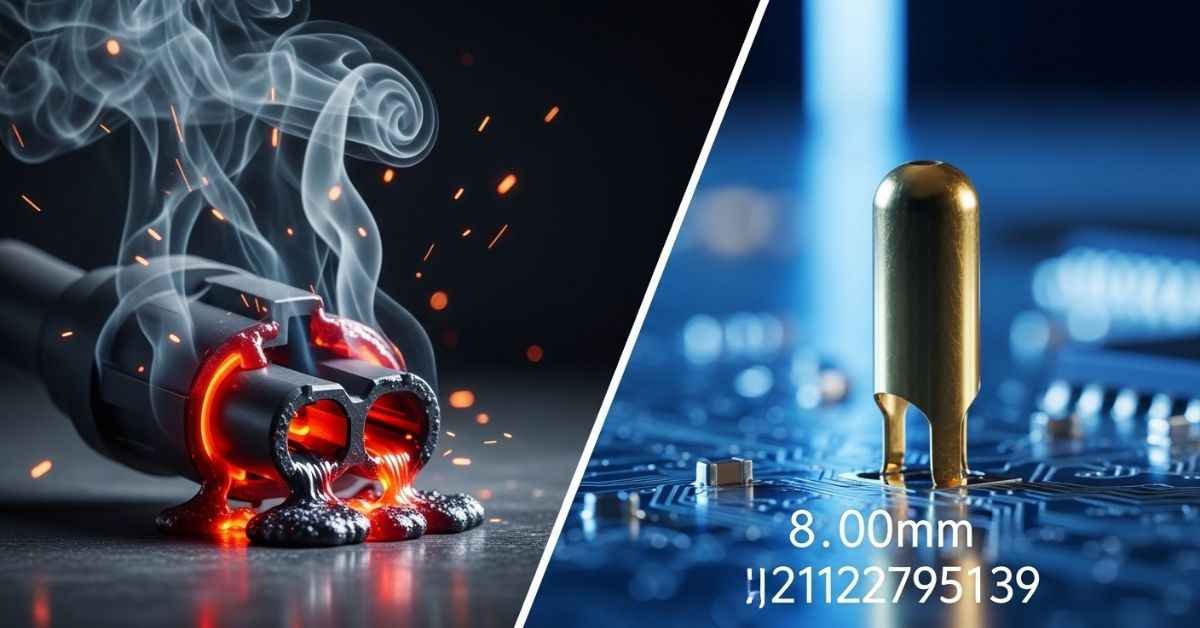
When 200 amps flow through a single point, physics creates heat. This is due to electrical resistance. If a pin has high resistance, it acts like a heater. Excessive heat destroys nearby chips and weakens the plastic housing. Many users fear that their power connectors will eventually char or melt.
The design of this 8.00mm pin minimizes this resistance. Because it is made of a high-conductivity copper alloy, the energy flows with very little friction. The gold plating on the surface ensures the contact point is clean. A clean contact point has the lowest possible resistance. This keeps the temperature within a safe range even during peak usage.
Furthermore, the large surface area of the 8.00mm diameter helps. Larger surfaces can dissipate heat better than thin wires. When you use several of these pins in a row, the heat is spread out. This prevents “hot spots” that could lead to a system failure. It is a proactive way to manage thermal energy in a power-hungry environment.
The Science of Gold Plating for Industrial Reliability
You might wonder why gold is used instead of cheaper metals like tin. In high-power applications, reliability is worth the extra cost. Tin can develop “whiskers” or thin layers of rust called oxides. These oxides act like a wall against electricity. If the wall gets too thick, the power shuts off or sparks occur.
Gold is a noble metal, meaning it does not react with oxygen. Even in a salty or humid factory, the 2122795139 stays conductive. This is vital for “mission-critical” machines that cannot go offline. If a server in a data center stops because a pin rusted, it could cost thousands of dollars per minute.
The gold layer also acts as a lubricant. When the pin enters the socket, it slides smoothly. This prevents the metal from “galling,” which is when metal surfaces stick and tear each other. By keeping the surface smooth, the pin can be plugged in many times without losing its quality. This makes it an excellent choice for modular systems that need regular maintenance.
Implementing SMT Mounting for Stronger Connections
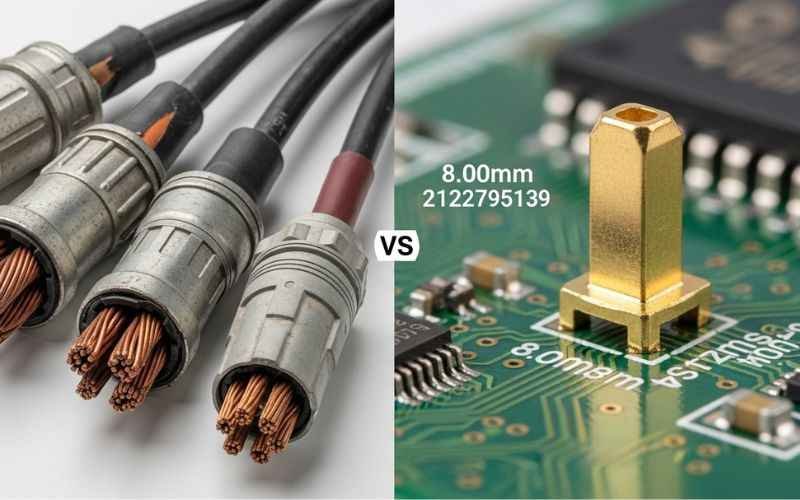
Many high-power parts use “through-hole” mounting. This requires drilling holes in the board. While strong, it limits where you can put other parts. The 2122795139 uses Surface Mount Technology (SMT). This allows for a cleaner board design and faster assembly using automated robots.
The base of the pin is designed to sit flat on a solder pad. During the “reflow” process, the solder melts and creates a powerful bond. Because this pin carries so much current, the solder pad must be large. This large pad also acts as a mechanical anchor. It prevents the pin from being ripped off the board if a heavy cable is attached.
To get the best result, the solder paste must be applied evenly. Engineers often use a “step stencil” to put more solder around the pin base. This ensures a thick, strong “fillet” or wall of solder. A strong fillet means the pin can handle the “mating force” when the socket is pushed onto it. This keeps the board healthy for its entire life.
Solving the Vibration Problem in EV Charging and Robotics
If you are working on an electric vehicle (EV), you know about vibration. Cars shake constantly as they move. A standard electrical connector might wiggle loose over time. If a high-power connection wiggles, it creates an “arc.” An arc is a dangerous spark that creates extreme heat and fire risks.
The 2122795139 handles vibration through its mass and fit. The 8.00mm size provides a very tight and secure fit within the Sentrality socket. Because the socket “floats,” it absorbs the shaking. Instead of the pin rubbing against the socket walls, the whole assembly moves together.
This “coupled movement” stops the metal from wearing down. In the industry, this wear is called “fretting corrosion.” By stopping the rubbing, the pin stays in like-new condition. This is why this part is a favorite for heavy machinery and charging stations. It stays connected through the bumps and shakes of the real world.
Designing for Energy Efficiency and Low Voltage Drop
In big power systems, even a small loss of energy is a problem. This loss is called “voltage drop.” It happens when electricity struggles to move through a connector. If your battery provides 12 volts but your motor only gets 11 volts, you are wasting 1 volt as heat.
The 2122795139 pin is designed for maximum efficiency. Its low-resistance path ensures that almost 100% of the energy gets to its destination. This is very important for battery-powered devices. Lower energy loss means the battery lasts longer on a single charge. It also means the system runs more efficiently, which is better for the environment.
When designing a board, the path leading to the pin must also be wide. Using this pin encourages good design habits. It forces the use of thick copper traces on the PCB. Together, the pin and the board create a high-performance highway for electricity. This ensures your device does what it is supposed to do without wasting power.
Why the 8.00mm Diameter is the Industry Standard
Size matters when dealing with hundreds of amps. A smaller pin, like a 3.40mm version, simply cannot carry the load. It would act like a fuse and pop under pressure. The 8.00mm diameter of the 2122795139 was chosen as a “sweet spot” for industrial power.
It is large enough to be extremely strong. You cannot easily bend or break this pin with your hands. This physical strength is important during the shipping and assembly of big power units. It also allows for a larger contact area with the socket. More contact area means more paths for the electricity to flow.
Despite its strength, it is not so large that it ruins the board layout. It provides a perfect balance of power and size. This standard size also means that many different types of sockets can work with it. It gives you more options when you are designing your final product. You are not locked into just one way of doing things.
Avoiding Common Installation Mistakes
Even the best part will fail if it is installed poorly. One common mistake is using too little solder. Because this pin is a large piece of metal, it acts as a “heat sink.” It sucks the heat away from the solder pad. If your oven is not set correctly, the solder might melt on the outside but stay hard on the inside.
Another issue is “misplacement.” If the pin is not centered on the pad, it might tilt. A tilted pin is much harder to mate with a socket. Even though the system “floats,” it has limits. Always use a high-quality “pick-and-place” machine to set these pins. This ensures they are perfectly vertical and centered.
Finally, keep the gold surface clean. Do not touch the pins with bare fingers. The oils from your skin can interfere with the connection. Always wear gloves or use vacuum tools to handle the parts. A clean installation is a reliable installation. Following these simple rules will save you from “headaches” later on.
Comparing SMT Pins to Traditional Busbars
In some designs, people use “busbars” or thick metal strips to move power. While busbars are strong, they are very hard to change. They are usually bolted down and take up a lot of room. The 2122795139 pin offers a “modular” alternative.
With these pins, you can “plug and play” your power components. If a board needs to be replaced, you just unplug it. You don’t have to unscrew multiple bolts and heavy metal plates. This makes the machine much easier to fix in the field. It also allows for “blind mating,” where you can’t see the connection point but can still feel it click into place.
This modularity is why modern data centers love this pin. They can swap out power modules in seconds. It keeps the internet running and the servers cool. Switching from old-fashioned busbars to a pin-and-socket system is a huge upgrade for any high-power project.
Quality Control and Verifying Your Parts
There are many “fake” or low-quality pins on the market. These knock-offs might look like the 2122795139, but they use cheap metal. Cheap metal has higher resistance and will get much hotter. Always buy your parts from a trusted source to ensure you get the real Molex product.
You can verify the quality by looking at the gold finish. A real Molex pin has a smooth, even coat. It should not have scratches or dull spots. You can also test a sample by running it at full power for an hour. A high-quality pin will stay within the expected temperature range. A cheap one will quickly go over the limit.
Using genuine parts builds “trustworthiness” in your brand. Your customers will know that your machine is safe and well-made. It is never worth saving a few cents on a pin if it causes a fire later. Stick to the proven standards of the Sentrality line for the best results.
The Future of High-Power PCB Interconnects
As we move toward more electric cars and faster computers, the demand for power will only grow. The 2122795139 is part of a trend toward “smarter” power. It isn’t just a piece of hardware; it is a solution for thermal and mechanical challenges.
We may see even larger pins in the future, but the 8.00mm size will remain a staple. Its ability to “float” and manage heat is exactly what the industry needs. By learning how to use this part now, you are preparing yourself for the future of engineering. You are moving away from old, rigid designs and into the world of flexible, high-efficiency power.
This pin represents a shift in how we think about “big power.” It is no longer about just being big; it is about being smart and adaptable. Whether you are building a charger or a robot, this pin gives you the tools to succeed.
You May Also Like: Tara Renee Schemansky Biography: Secrets Inside
Final Steps for a Successful Design
Choosing the 2122795139 is a great first step. To finish your project, make sure your board is designed with thick copper. Use a high-quality socket from the Sentrality line to ensure the “float” works correctly. Test your system under full load to check for any hot spots.
If you follow these guidelines, you will create a powerful and reliable device. You have solved the common pains of alignment, heat, and durability. You can now build with confidence, knowing you have used the best parts for the job.
Common Questions About the 2122795139 Pin
Can I use this pin for AC and DC power?
Yes, you can use this pin for both types of current. Its main job is to provide a low-resistance path for electricity. It does not care if the power is “alternating” (AC) or “direct” (DC). However, you must always stay within the 200-amp limit. Going over this limit will cause the pin to overheat regardless of the current type. Always check your total power load before finishing your design.
What happens if the pin gets scratched during assembly?
A small scratch on the gold plating might not cause immediate failure. However, it can expose the copper alloy underneath to the air. Over time, that spot might rust or “oxidize.” This increases resistance and creates heat. If a pin is deeply scratched, it is best to replace it. This ensures the connection stays perfect for the life of the product. Always handle these pins with care to keep the gold surface smooth.
Is this pin compatible with hand soldering?
Hand soldering is very difficult for a part this size. The 2122795139 is a large piece of metal that pulls heat away quickly. A standard soldering iron may not be strong enough to melt the solder properly. This can lead to a “weak” connection that might fail under stress. It is highly recommended to use a reflow oven or specialized heating tools. This ensures the entire base of the pin reaches the correct temperature for a solid bond.
How much weight can the pin handle on the board?
While the pin is very strong, it is not meant to be a primary structural support. It is designed to hold the “mating force” of the socket. If you have very heavy cables, you should use extra brackets to hold them. This prevents the weight of the cables from pulling on the solder joints. The pin is great for electrical flow, but you should always help it with mechanical supports for heavy wiring.
Can I use this pin in outdoor environments?
You can use it outdoors if it is inside a protected box. The gold plating helps protect it from moisture in the air. However, it is not “waterproof” on its own. If water or salt spray gets directly on the connection, it can cause a short circuit. Always use a proper “IP-rated” enclosure to keep the pins dry and clean. This will ensure the high-power system stays safe and works correctly in any weather.
Disclaimer
The information provided about the Molex 2122795139 component is for educational purposes only. While we strive for accuracy, electrical engineering projects involve significant risks. Always consult official Molex technical data sheets and local safety codes before installation. We are not liable for any damages, injuries, or system failures resulting from the use of this guide. Use this technical data at your own risk.

Emma Rose is a simple, clear, and helpful writer at Blogtime. She enjoys creating easy-to-read articles on tech, lifestyle, travel, and everyday tips. Emma’s goal is to make learning simple for everyone by explaining ideas in friendly and easy words. When she’s not writing, she loves reading, exploring new places, and finding inspiration in everyday life.